

BUDGET ENTERTAINMENT –
THE DANZIGERS ON TV
Rick Davy investigates the small-screen creations of the Danziger Brothers.
Native New York brothers Edward J Danziger and Harry Lee Danziger first had careers in law and music before setting out in business together. In the late 1940s they created a sound studio dubbing foreign-language films for the US market before embarking on creating a film-making empire of their own. Their first feature film was Jigsaw, a film-noir drama which included Marlene Dietrich and Henry Fonda among its cast. In all, the Danzigers would produce over 100 feature films.
In 1952 the brothers moved to England with the aim of making television series. Their first was Calling Scotland Yard (shown as Adventure Theater in the US); a 13-episode anthology series in which host Paul Douglas would introduce a two-act crime drama story based on a memento obtained in England (where each story was set). The episodes were shown on NBC in the US and theatrically in the UK as cinema featurettes, with some episodes combined to create B-movie features.
One of the hallmarks of Danziger series was the relentless through put of familiar British actors, and this is evidenced even in this first series with George Baker, Leslie Philips, Hazel Court, John Laurie,and others guest-starring in episodes.
This type of crime anthology drama proved successful and Calling Scotland Yard was immediately followed by The Vise. This time hosted by Ron Randell, each episode would have a twist at the end and was summed up by the narration which would open each episode; “The story we’re going to tell isabout people caught in the jaws of a vise in a dilemma of their own making!”
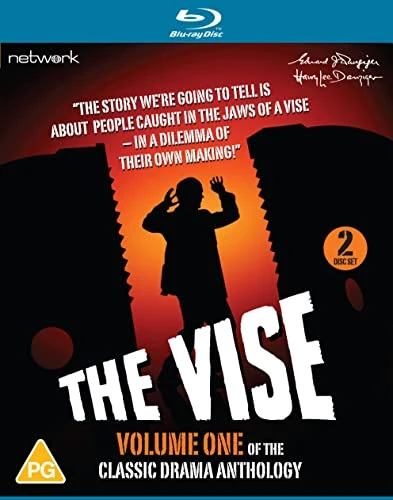
The series introduced the character of one-armed detective Mark Sabre, played so wonderfully byreal-life amputee Donald Gray, featuring again a host of British talent, including early roles for future stars such as Patrick McGoohan, Honor Blackman, and Christopher Lee.
Following these successes, the brothers felt that rather than continue to rent out studios (such as Shepperton and Nettlefold) to make their series, they should operate independently. They purchased a former wartime aero-engine testing factory in Elstree and converted it into their own studio space.Although called New Elstree Studios, the building was affectionately known as “The Danziger Studios”.
The Danzigers’ operation was now a well-oiled fast turning machine, with two episodes of television,or one feature film, produced each week. Directors who could work quickly and under pressure were employed to ensure this quick turnaround of episodes, with names such as Ernest Morris (whodirected 55 episodes of the various Sabre series) and David Macdonald (who directed 48) the two most prolific.
Brian Clemens, who later became synonymous with The Avengers TV series and created The Professionals, would write many episodes of Danziger series. Later calling them “potboilers”, he claimed that he was instructed to write stories to fit the standing sets they had at the studio that week,rather than create something afresh.
After 65 episodes of The Vise, it was decided to drop Randell’s introductions and instead focus on the character of Sabre, such was his popularity with the viewing public. The series Mark Sabre (also known as The Vise: Mark Sabre), followed swiftly by Sabre of London, gave the viewers more than 150 instalments of crime-busting.
Inspired no doubt by ITC’s successful series Interpol Calling, the Danzigers then decided that a more youthful and international investigator would be a hit with viewers and cast Richard Wyler (who later worked in Hollywood under the name Richard Stapley on features such as Alfred Hitchcock’s Frenzy)as agent Anthony Smith in Man from Interpol.
However, despite a classy jazz soundtrack by Tony Crombie, the 39-episode series failed to capture viewers’ imagination and has since been described as having “an air of tired hysteria”.
John Ireland, who in 1948 had been Oscar-nominated for his role in All The King’s Men and would later be commemorated with a Hollywood Walk of Fame star, would lead the Danzigers’ next series: The Cheaters.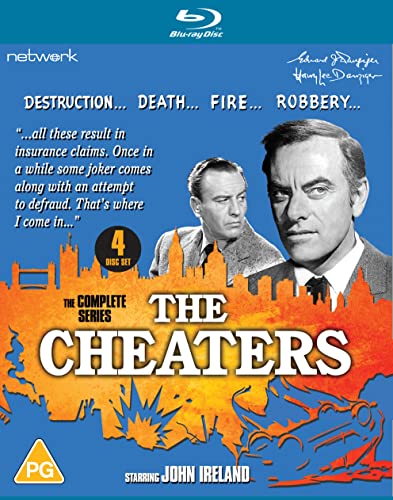
Although the world of insurance fraud may not seem the most exciting subject for a series, it is fondly remembered to this day mainly due to Ireland’s dry, humorous, and sometimes sardonic performance as a persistent fraud investigator. Robert Ayres also gives a fine performance as Ireland’s moralistic superior, and the series features some lovely London-based location footage. However, like Man From Interpol, it did not run beyond 39 episodes.
The beginning of the 1960s saw a shift in viewers’ tastes, and it was at this time that the Danzigers became less productive and arguably less creative. Their last production for television would be a swashbuckler series, inspired by the success of several similar series produced by ITC in the late 1950s.
After seeing him appear in small roles in series such as Danger Man and No Hiding Place, associate producer Brian Taylor cast Irish actor Dermot Walsh – who had also built up a fine reputation following some Rank film appearances – in the lead role of Richard The Lionheart. Australian actor and flamenco dancer Trader Faulkner would play the wonderfully contemptuous Prince John, and Ernest Morris was again tasked with directing. Whilst a key tenet of production was to keep the stories as true to Richard’s life as was possible, Taylor conceded to TV Times at the time “we have taken some liberties here and there”.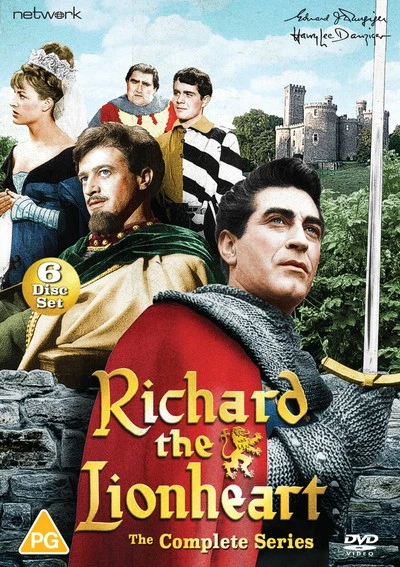
Filming at the same time as the movie The Spanish Sword, also directed by Morris and utilising sets, costumes, and cast members from Lionheart, the 32nd and final episode was produced in December 1961.
Richard The Lionheart was a fine coda to the Danzigers’ television output. Walsh was assured in the role, the plots had the usual derring-do and political intrigue associated with the genre, and an invigorating music score by Bill Le Sage, who also composed the music for The Cheaters, helped give the series the family appeal it needed.
The brothers, however, decided to call it a day when their proposed colour series Ali Baba failed to receive commercial backing. Instead, Edward and Harry concentrated on their hotel business (having purchased the Gordon Hotels Group in 1958) and New Elstree Studios was sold in 1965 for use as warehousing.
Whilst the accusation of “quantity not quality” often directed at the Danziger series has a ring of truth about it, that shouldn’t take anything away from the thrilling escapades they churned out on a weekly basis. With a procession of recognisable British stars in every segment, the brothers’ eight-year output was extraordinary.
This article originally appeared in Talking Pictures TV’s excellent film, TV, and entertainment magazine Intermission and is reproduced here with kind permission from Renown Pictures Limited.
Words © Rick Davy, not to be reproduced without his permission.
To find out more information about Intermission visit:
https://renownfilms.co.uk/product-category/intermission-the-new-glossy-40-page-proper-magazine/